
Spring 2026. It’s not an easy time to lead a school. Lots going on as always –budget considerations, teacher and staff evaluations, testing, testing, testing, seeing students off to a new school and perhaps a new life while hoping they “leave well”. These things and so many more.
Since the late 2000-teens, it’s been harder for people who work in schools. Greater poverty, people’s increased struggles to make it into or stay in the middle class, troubled times for immigrant families, bullying, anxiety, depression from social media, less interest in classroom learning. COVID shattered many teaching communities, with people retiring, relocating, losing faith, or just plain tired, though sticking it out. We’re still digging out from under that burden the best we can.
Yet, in my travels, leadership coaching, and problem-solving, as always I see leaders doing amazing things, sometimes surprising things, things almost always uplifting in and for their communities. I’m writing to hold up three examples of school leaders doing things that make a difference, things that distinguish their courage, stamina, and thoughtfulness.
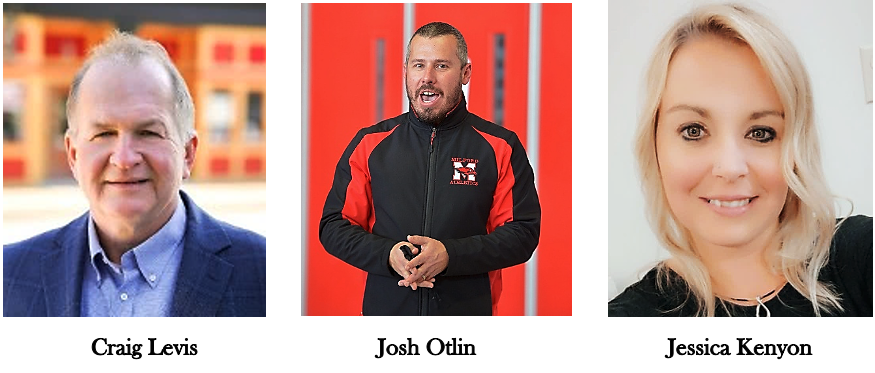
Jessica Kenyon
I’m not sure what called Jessica to school leadership, but after knowing and working with her for three years, it’s pretty clear to me it was just that, a calling. Her love of young people and of helping others to be great as they work with them seem to be at the center of her craft.
Up in the North Country of Vermont and New Hampshire, over the years she’s been a teacher in both elementary and middle schools, an intervention specialist, a mentor teacher, a district curriculum and professional development coordinator, an Assistant Principal, and, as of May 2026, is winding down her first principalship in Walden, VT. She’s stayed in the game across different schools and districts, all the while maintaining a focus on what good things can happen in classrooms when the right conditions exist.
That attention to adult culture and climate led her to spend a good deal of her first weeks at her new school, in mid-summer, meeting with vacationing teachers and staff to hear their take on things that were working well and where some squirting of the oil might be needed. She wanted to make a positive difference as soon as she could, but wanted that work to reflect her staff’s ideas. Leaders often face those questions: can I go faster with my ideas? will the results be better? will listening a great deal slow us down?
One of things she heard was that there were plenty of meetings, but they were not consistent in terms of focus, facilitation, and the most important metric –people leaving the meeting feeling settled and having accomplished something. Jessica also heard that communication between and among individuals and the many different teams and work groups they serve on could be inconsistent. Not surprising. Schools are busy places, with lots going on, and despite the illusion of repetition, they’re dynamic and different day to day. Having some people know some things and others more or less so, can make work in the school unsatisfying and unproductive. And it can lead to hurt feelings, some people perceived as “in” and others less so, even to gossip and quiet feuding.
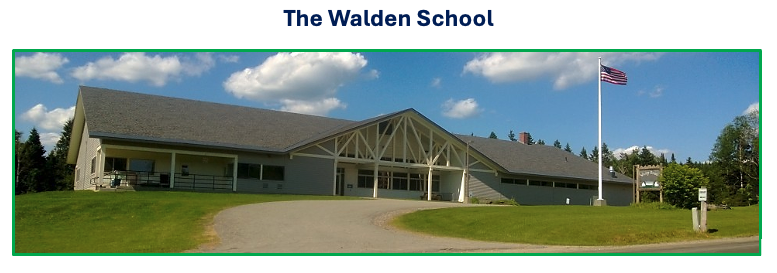
So, as Jessica put it, “I made the broad issue of climate, culture, and communication one of the three, formal, overarching school goals for the year. I wrote and talked about the ‘why’ of that goal, to let people know it was really their goal, and I invited ideas from different people about how best to tweak the moving parts in ways that fit Walden Elementary School’s needs and capacity. Remembering back myself to different settings where the principal or administrator ran just about everything, I made it a goal to begin distributing leadership in team and committee meetings, including in professional development. Some people were initially surprised at the invitation, but I no longer facilitate every meeting, and have been putting ownership onto a very talented, willing, and able group of growing stars that run weekly PLCs, professional learning, and EST meetings. I think it’s a big win for us and I hear a lot from teachers that it’s new and refreshing and they enjoy taking the responsibility.
“Even though the school is small, clear communication and integrity matter a lot. By that I mean, we can’t lapse into gossip, withhold ideas or communications to feel more ‘in’ or important. We have to work hard to make sure people know what they need to know and when they need to know it. We’ve decreased misunderstanding and hearsay by going directly to the source, and by making it routine and desirable to seek clarity in our communication of all sorts with one another. ERC helped me a great deal with introducing the ERC Psychological Contract principles and the “One-Minute Correction” script which has brought us to a new level of collaboration in our professional practice.
“At Larry Myatt’s suggestion, I did a “mid-year look-back” to our prior summer’s work together, specifically the goals we had chosen and asked people to comment – in hindsight, were they worthy goals? how are we doing with them? and, what do we need to do from January to June to live up to them? It was a way to help them ‘think like a leader’, always looking back, at the present, and to what’s up around the bend, as Larry would say. People were really surprised, pleasantly so, at doing that little exercise, to be reminded of our work together, of those late summer days getting to know each other and making plans for our year of collaboration. And we have, for ourselves, new and refreshed direction about ‘how to end well’.
“As a result, as the year winds down, I have so many success stories, so many stories of people who have surprised me with unsolicited positive comments about the school, about the work, about their colleagues, and about me! It would be easy to take communication and meetings for granted, they just happen, kind of. But schools are unique and complicated, different year to year, even maybe month to month. Looking back to my arrival here, I’m feeling good about having lived up to what I wanted to try and achieve in my first principalship, to build a positive school community, one where people strive to do the right thing for the students and for each other. It’s kind of a dream come true for me. I’m part of a school that makes me proud!”
Josh Otlin
I first met Josh Otlin when he joined the Greater Boston Principal Residency Network as a candidate for Massachusetts principal licensure. He was teaching at Hudson High School at the time. In the decade I led that network, dozens of outstanding new high school principals were propelled to excellence by authentic problem-solving and collaboration with sitting distinguished principals and their mentees. It was clear right away that Josh would be one of those, eager to learn and collaborate, sharp-minded and deeply reflective, and holding high standards for his own practice.
The small, growing (over 30,000 inhabitants) and vibrant city of Milford, MA, located in the Route 495 region that rings the Boston suburbs, was fortunate enough to attract Josh into their school system for his first principalship, and in return, offered him a history, culture, and dynamism that he appreciated and wanted to foster and grow. In the 1800s it was called a “quarry town” with its pink granite, and has a long and proud working-class history, in addition to attracting immigrant families with the craft skills, energy and traditions that they bring.
Josh has what I call “big energy” and an eclectic background in terms of his studies and different jobs. He draws upon that broad range of learning and settings to think through matters of organizational management, school practice, and interpersonal relations. He’s a reader and a student of leadership, places where I’m happy to say that we connect. When we talk, it always helps me to deepen or broaden my own thinking. He is especially adept at getting to the heart of issues, re-framing or re-interpreting them in helpful, and often inspirational ways. More about that down the page.
Something I’ve focused on often in my own principalship and since, as a coach and consultant to leaders and schools, is the power of “leadership commentary”. The basic idea as I see it is that good teachers have their heads down, in a manner of speaking. They’re supremely focused on their students, their lessons, their teaching and caregiver communities. We can count on them to be paying rapt attention to the critical work in front of them.
We, as leaders, have to survey the landscape and consider the road ahead. Leadership commentary can take the form of reminders or trends from the larger world or community, things happening in other schools, or with other people, that may reach us but which may not be felt at this very moment. (Don’t get me going on the industrial schedules the teaching profession must live by/with, with scarce time for collaborative talk, problem-solving, and dreaming!) Good leadership commentary often involves a helpful reframing of an issue or problem, a way to consider issues through another lens or via a different point of entry.
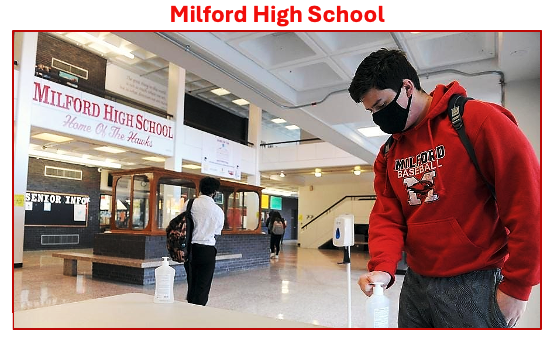
As mentioned in the intro to this piece, the last decade has been a harder-than-usual time in schools. So, visiting Josh’s school recently, in a far-reaching conversation (as always), when he mentioned in passing some of his commentary to his teachers and staff at Milford High School, about the very heart of their work, it hit me right away as an example of uplifting, powerful framing that I wanted to share. For this post, I asked him to recount his message:
“When our students succeed, we feel like we are succeeding, and for good reason. But when we see numbers of students failing to thrive, we feel like we are failing. If you've been here since 2019 or earlier, you know that we have a smaller percentage of students succeeding today than we did back before 2020. It's tough to swallow. It feels bad.
“But our feelings can and do deceive us, and it's important to see things as they really are. Since 2019, our percentage of English Learners has increased by 112% and our percentage of low-income students has increased by 87%. We also had a pandemic in there, and we also had two extended stretches of intense ICE action in our community in a year, resulting in what I’d call a staggering 6% enrollment drop in just 10 calendar months.
“Simply put, our jobs are much, much harder today than they were in the past. Every year, the number of students who enter in grade 9 having experienced success in grade 8 is getting smaller. Every year, the number of students who enter in grade 9 with the ability to read grade-level texts is smaller, and the number of students who enter in grade 9 with the ability to do grade-level math is getting smaller. Every year, fiscal conditions are getting tighter and political conditions are getting nastier. And it is in this context that we consistently produce best-in-class results on most standardized measures of achievement and growth. When you compare our results to demographically similar schools, you see the same thing over and over again, regardless of which measures you look at. Our results are either best-in-class or right up there. We have adapted very efficiently and effectively to serve a rapidly changing student body with very complex, intensive educational and socio-emotional needs.
“We often feel like we are failing because we see the percentage of successful students dwindling from year to year. But our feelings deceive us. We're doing really impressive work under really difficult conditions that are not about to get any easier. Chins up.”
Wow, Josh. You’ve given us precise and, may I say, elegant and beautiful example of leadership commentary. Adults in schools do indeed benefit from sincere talk from a respected leader– being reminded, being inspired, being consoled, being updated -hearing from a person whose job it is to be aware of as much as possible as what’s happening right here, far away, and all around us.
Craig Levis
Craig Levis is a leader with a set of eclectic experiences and he brings them all to bear in his work. With a background in athletics, mental health, addiction treatment, and special education, he had most recently served as superintendent for several years in a district where finances and governmental relations made that work complicated. Yet, he persevered and won a loyal following by showing up whenever an important conversation would be happening, by being a good listener, and by being both fair and decisive.
His recent retirement was short-lived, given that his hometown needed a high school principal on extremely short notice. Craig agreed to serve as interim for a full year. His school building is brand new with an architectural design being studied by many other communities, and one that serves more than 2,000 students in four distinct, separate, “houses”, with a complicated array of administrators and staff. Given the size and lay-out it could be a challenging place to find community and belonging for some, be they students or adult professionals, then add to that a new leader.
Early in the year, my visits and what I heard from teachers and other administrators told me he was up to his old tricks -being as visible as possible, listening well, and speaking plainly. Craig’s approach to his year as the leader of Attleboro High School reminded me of an old leadership paradigm about positional authority– the “1/200 phenomenon.”
Psychologist and author Robert Evans (Family Matters, The Human Side of School Change) introduced to me some deeper thinking about the positional authority that comes with school leadership. There are several kinds of “authority”, often occurring simultaneously and/or in stages, some positive, others less so, within an organization. Authority takes many shapes and forms –positional authority, expert authority, craft authority, moral authority, charismatic authority and a few others.
In a school, the ultimate positional authority resides with the principal. 1/200 stands for the fact that there is only one principal -the numerator, that is. The denominator, roughly 200, represents an estimate of all the people and interactions, large, small, and in-between, that are part of a principal’s day. On any given day that denominator might be 70 or 80, but on others might be 300! For the leader, that’s a lot of contacts, often blending together into a blur of people, ideas, and events. For those who are a “denominator”, its often a much more unique and special interaction.
“Mom, the principal came into Ms. Jones math class today!”
“Hey, the new principal was out front this morning when the buses came in.”
“Phil, did you see the principal was in the teacher’s room twice today?”
“Julie, I saw the principal in the supermarket this weekend. She was in the Lettuce Aisle!”
“I got a note in my box to drop by the principal’s office. Wonder what that’s about?”
I remind principals I work with that they’re always the 1, the numerator, and that it carries a charge, so to speak. For many on the denominator end of things, that one interaction might be one of the biggest and most important of the day. As principal, you have the authority to tell people what to do. In some cases you only need to hint and guide. Use soft power as needed, but also be the “boss” as needed. Across-the-desk, sit-down-together meetings are powerful --you mean business. I remind leaders to keep in mind that where you show up matters as well as what you say and how you say it. Craig gets all of this naturally.

So, functioning in an interim role, in a big, new, building with a community looking for role clarity as it matures, and, as an “unknown” leader, Craig realized that one of the most important things he could do would be to show up. Every morning, and I mean every morning, at the front door to greet students. In the cafeteria for all three lunch periods unless there is an urgent meeting. At sports team’s practices and games. At all honor events, music and theatre productions. Inviting himself to team meetings, to teacher discussions, to a table full of students, athletic coaches, or the Special Olympics organizers, and when asked, reflecting back what he heard, and always honoring their voices.
A moving and memorable highlight for me, as well as for Craig, was the arrival of a letter handed to him one morning. It was from a sophomore, a young woman who had moved to the U.S. from Haiti when she was in middle school, a major life transition from an unpredictable and often dangerous homeland.
Dear Mr. Levis,
I want to say thank you for something that may seem small but truly makes a difference every day. I really appreciate that you stand outside and hold the door for us each morning, even when it’s freezing cold. It shows a lot of dedication and care and doesn’t go unnoticed.
Starting the day with your positive attitude and a fist bump makes coming to school feel welcoming and encouraging. It means more than you might realize.
Your student,
“E”
In a line of work where we too often don’t have opportunities to listen to the students and know precious little about what befalls them when they leave our care, this letter was a gem. More than two-thousand students, every morning, all year long. What was in their minds as they were playing “denominator”?
I thank Craig for letting me share it, and for reminding us of the power of “showing up”.
As I began this essay, in my travels, leadership coaching, and problem-solving, I see leaders doing amazing things, sometimes surprising things, things almost always uplifting in and for their schools and communities. I’m pleased and proud to know three of them and have been able to lift up their stories.