*** *** *** ***
(Note: This is Part One of a 3-part essay. Part One is a 10,000-foot scan, a situation analysis of the education landscape. Part Two will focus on the nature of innovation needed in the public education sector. Part Three will pose an innovative prototype and suggest approaches to develop and connect with others.)
*** *** *** ***
I was fortunate as a beginning principal to be introduced into a national conversation about updating and reinventing school, especially high schools. It was a time of thoughtful exploration and energetic partnership with progressive practitioners and supporters. Of note, the efforts enjoyed substantial investment from the private sector and major philanthropies toward building a better institution for young people. The mission was to update an institution largely unchanged for a century, one built on faulty premises of cognition, motivation, and youth development, one whose design favored sorting, compliance, and order.
I’ve been unfortunate to watch the unraveling of those redesign efforts and the loss of that sense of mission of the 1990s. Watching the public educator sector descend into a mediocrity unlikely to survive the forces competing for its key elements for the sake of profit or politics compelled me to lay out the issues as I see them, and to suggest some new ideas. I hope this piece will inspire others to think more deeply about the past and more urgently about the future of our schools.
—Larry Myatt
*** *** *** ***
Part One –
Ennui and Conformism in the Public Education Sector
The K-12 public education sector is mired in a deep rut, repeating half-hearted attempts at improvement with mediocre results. Rudderless, frayed by continuous budget cuts, lagging achievement, and the disruption of the Pandemic, the system now faces direct attacks from a politically and geographically broad "school choice" movement. Despite the individual beauty of young people and the fortitude of those that serve them daily, the sector's defining trait is an overwhelming sense of ennui.
Trapped by a decades-old top-down reform paradigm, inside districts and schools quietly compliant educators wait for an imagined "big bang"—a massive, all-encompassing reform to right the ship and cast away the detritus of the last 25 years. Veteran educators, remembering the immense impact of No Child Left Behind, tacitly await some similar federal or, perhaps, state mandate. This time they hope for smarter ideas, ones that actually work, and an unlikely seat at the decision-making table. Yet they remain conditioned to be told how to execute virtually every aspect of their jobs. Younger policymakers and educators as well seem to be waiting, though less certain of what they should seek or what they’re waiting for.
Before digging into the context, I want to touch on two important points. First, is that I don’t buy the idea that schools themselves are the sources of endless failures. That narrative has become a tool of politicians left and right, op-ed columnists, vendors wanting to make a buck (more on that later), certain ideological charter school promoters, and others. But it’s a critique too often used without understanding whether or not it’s accurate, or more importantly, the reasons why any school might struggle. The education reform industry has little to show in improving teaching and learning, but increased market share and political profit are generated by permanent crisis/reform.
Complying with a stifling load of reports and check-the-box correspondence, managing student behavior, responding to parents and caregivers, keeping enough teachers in the classroom, and managing conflicts among local political factions have dramatically altered the nature of the principalship. Creativity, engaging with teachers about practice, and the development of exciting new initiatives have become largely absent from school leadership, practitioners say.
Second, is the crucial role of negative social determinants: income, housing, crime, nutrition, and others that impact wellness and school achievement. Resultingly, more costly urban schools cannot match the achievement of nearby affluent districts, and the impact of those determinants is not likely to be dramatically thwarted by any innovation on/in the school model itself. But thoughtful new approaches to its design could no doubt mitigate some of the after-effects of growing up in challenged circumstances. Our schools could be and do so much more, thus the need to investigate that structural paralysis at a deeper level.

Stuck in the orbit of a failed idea. We are now three generations into “school reform” and virtually nothing has changed or improved. I wrote this piece some time ago in frustration. It lists the structural and cultural deficiencies that we have failed to address and might be a helpful review.
The people now in charge and, thus, those in classrooms remain semi-conscious captives of a failed yet persistent attempt to improve schools from the top down. The core idea with the afore-mentioned No Child Left Behind (2000) was, and remains, to rationalize schools and learning. What IS that concept of rationalization, you ask? Rational sounds good!
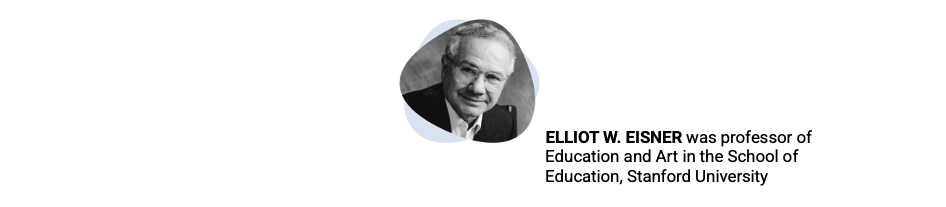
Check out this excellent explanation in Kappan from the brilliant Elliot Eisner who issued a warning that policy makers intentionally chose to ignore. NCLB was a set of lousy ideas all along. The insiders at the top didn’t do their homework, didn’t understand the complexities of schools, and, perhaps most critically, didn’t trust front-line educators to assist in the work.
Troublingly, the core ideas of NCLB, shrouded by bureaucratic reporting demands and “looking at data”, remain intact. Broken paradigms continue to stunt our thinking about improvement: measurement and quantification devoid of commensurability; predictions reliant on imagined control; test scores as hegemonic criteria; a failure to consider the impact of interactions and idiosyncrasies (i.e. the lives of students and teachers); extrinsic incentives and disincentives as motivators; these and more. They are poor, even absurd, ideas for improving schools, sacrificing the meaningful for the measurable, but they remain essentially the current rules of the road.
Profit from the status quo. Years ago no one believed that any “extra” money could be found in school budgets for anything. Now? Behold an ever-growing number of “technical service” providers, raking in dollars and expanding their markets, benefitting from the belief that no school can get better on its own: they have to have outside help. It’s an idea that plays well with boards and attentive parents who rightly sense the mediocrity. District leaders can now say, “hey, we’re using the XYZ group and they’re telling us just what to do”. While an exact census of every individual third-party contractor is difficult to pinpoint, data from school procurement platforms and national education groups indicate that tens of thousands of private vendors and third-party contractors now provide services across the roughly 13,000 to 14,000 public school districts in the United States. Here’s a glimpse at how that sector approaches things. Enough said?
Who's asking whether outside help is really helping? Virtually no one asks any longer if outside help actually works. There seems to be little discussion of who to hire, for what, and for how long. When I take it upon myself to ask district and school leaders what proof-points they required from recently hired firms, they rarely have an answer. Most often they show me vendor-provided plans and recommendations, logic maps, or guiding principles. I see lots of sophisticated documents but little evidence of improved achievement, the culture shifts we need post-COVID, or improved teacher practice. As mentioned above, its enough to say, “we’re using outside help”.
Why can’t these outsiders do better at guiding us? If we were to design backward from the true needs of young people, intellectual and social-emotional, we clearly wouldn't have the systems that we have now. When we ask students what they’d want in school they are pretty clear: learning with purpose, care for their well-being, and relationships with knowledgeable and caring adults. A policy agenda, informed and guided by those hired helpers, should create programs that ensure that such elements are present. And the accountability system should be built on what the kids are experiencing, not a test score. Poverty-related challenges are especially severe in our ever-expanding impoverished areas, rural or urban. The people we’re asking to help, the unaccountable intermediaries and contractors, don't live in or understand the places where their recommendations are being implemented. They have nothing at stake in their recommendations, and they take their cut off the top regardless of whether their solutions work.
What can we expect from policy makers? Have people at the top learned from NCLB’s failure? Would-be reformers of yesteryear like Arne Duncan and Rahm Emanuel seem to long for those bygone days. Where are other people looking for answers? Take a look at the recommendations put forward in this NY Times piece (and the reasoned rebuttal). Will it be back to the future? Will Washington, D.C. step in again? Unlikely. As of Trump in the White House, there is no longer a federal DOE to suggest much of anything.
Closer to home, state departments of education are unlikely to help us. For more than two decades all we seem to get from them are more reporting requirements and fuzzy remnants of decades old federal policy. Examples of state activity I’ve seen close to home over the last few years? Giving schools a “grade” (instead of support), changing often to new data information systems, mild adjustments to the rules for teacher/administrator licensure or certification, some tinkering with graduation requirements. In a mandate reeking of mothballs, over the past few years many states, in sync with some sleepy superintendent associations, have yet again required updates to district "image-of-a-graduate” frameworks, an initiative designed to make adults feel we are doing some significant updating work.
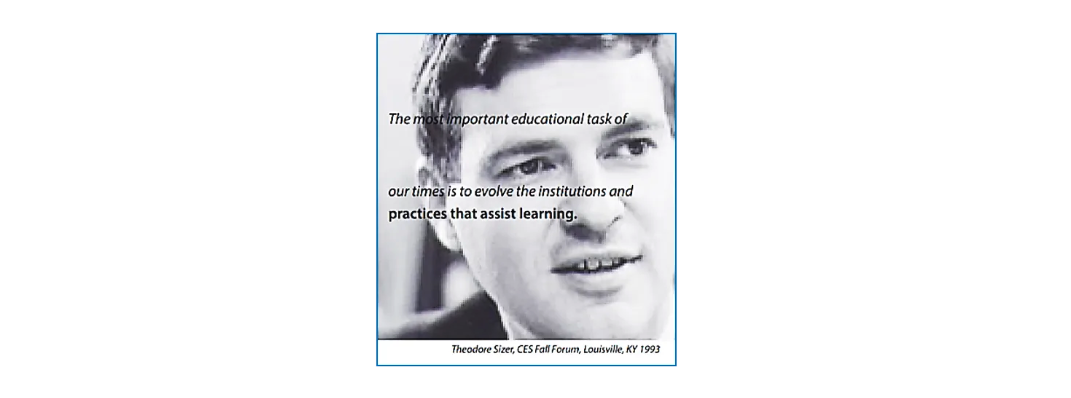
It’s important to note that these places are not full of bad people. A grad school course I once took, Sociology of Institutions, reminds us that these kinds of organizations don’t actually analyze or problem-solve as a function of their operations. They must deal with the same old problems while bound by the same old constraints. Without outside influences and intrusion attempts at change seldom occur, and even then, are done poorly, like NCLB. Per Joe McPherson, “bureaucracies approach large existing problems, tasks, and markets and serve them at an efficient scale in repeatable and predictable, albeit slow, ways. We want bureaucracies to be predictable and reliable.” As thus is the case with all bureaucracies, DOE’s can only strive to perpetuate what they have been told to do. We know how that’s been playing for twenty plus years. Years ago, Ted Sizer, fierce advocate for school redesign, suggested as the role of departments of education: fund us, root for us, but get out of the way.
Can’t the smartest people around help? Seemingly ready to do the complex work required to overhaul the sector, education “think tanks” have proliferated. Many feature exciting names like “The Center for Reimagining or Redesigning or Rethinking [choose one]: __Schools __ Education __ Teaching and Learning __ Life __ other. Just contact the one that sounds most promising. Many are situated at universities, a good place to look smarter. They feature lots of people with advanced degrees, but little experience in actual schools, each espousing their unique recipes for school redesign along with futuristic insights. But, on a closer look, they generally offer only vague principles regarding learning and design, and most look remarkably the same.
These think tanks get a lot of funding from big corporations. Private grant-making institutions remain among the largest financial backers, notably Gates, Walton, and Broad. They’ve been joined over the past decade by ultra wealthy tech entrepreneurs and private family funds, such as the Chan Zuckerberg Initiative, focusing on technology integration and what they call, self-servingly, “personalized learning” (i.e. machine-based). Many “centers” receive significant investment, much of it undisclosed, from individual donors who support expanded school choice, certain brands of charter schools, and/or the mandatory inclusion of religious principles. Some think tanks are freer than others to operate in less proscriptive ways, but all in all this loose consortium of big thinkers has demonstrated very little of substance in terms of innovation or redesign.
Traditional progressive philanthropies have largely stayed out of the mix. They may continue modest investment in middle-of-the-road programs or have gone elsewhere. I have heard two themes, explanations, directly from people I respect in the funding sector. The first is that there are few good ideas out there in which to invest and expect some pay-off. I must agree. The second, in light of the paucity of innovative approaches and the growing need of so many as the ultra-rich 1% pull further and further away, is to direct their giving directly to community organizations that do their best to mitigate those negative social determinants. These include food pantries, community gardening, arts, homework centers, youth development organizations, work-force preparedness, and anti-crime efforts.
Where does that leave us? That’s a pretty good list of those who are unlikely to help. Government won’t. Neither will charters. Or vouchers. Or different graduation requirements. Or the “Science of This or That”. If we can summon up the will and courage, we must innovate for real because the ultimate crisis is our state of structural paralysis. The issues are staggeringly complicated, deeply historical, and so tightly interwoven that no single proposed solution can survive more than a few minutes of conversation before running into insurmountable roadblocks. It reminds one of Einstein’s maxim that truly addressing a dilemma requires a new consciousness, innovative thinking on a plane we show little hunger for. This complexity can leave those in the sector asking a cynical question: why keep talking at all, when we can keep pretending?
Dr. Larry Myatt
*** *** *** ***
PART TWO will focus on the nature of innovation most needed in the public education sector. PART THREE will pose an innovative prototype and suggest approaches to develop and connect with others